 Advisory
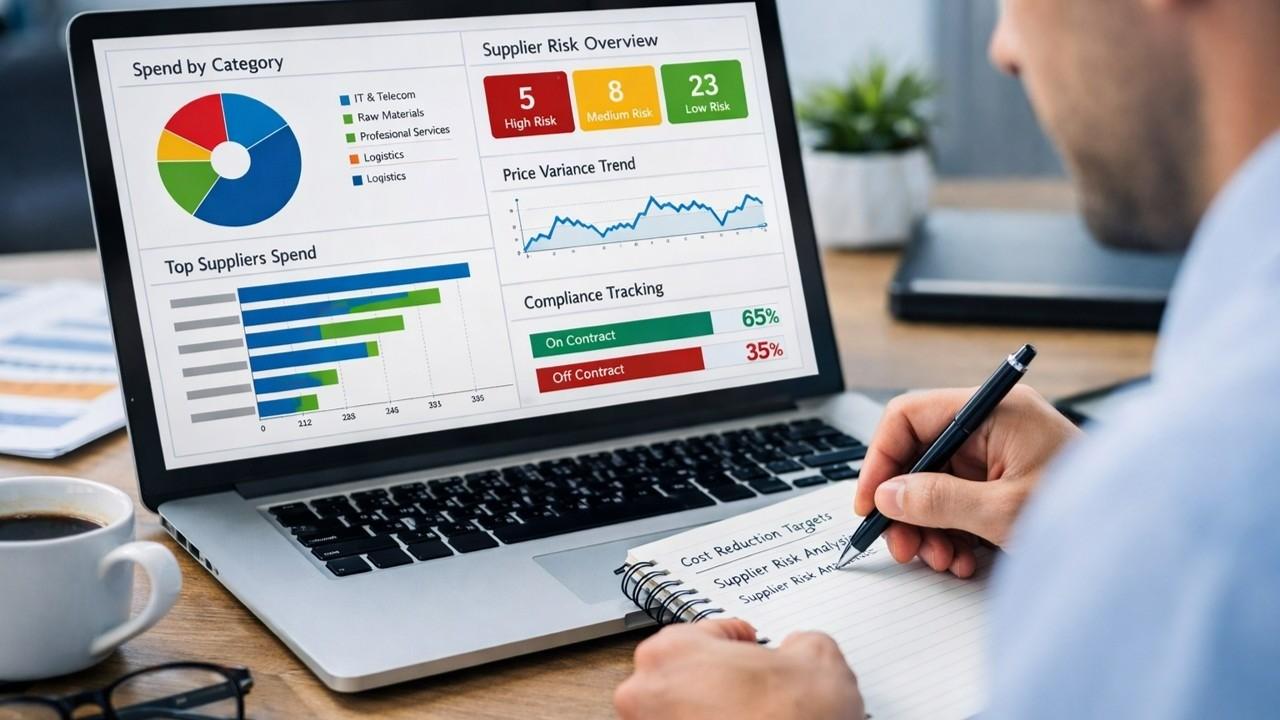
For years, the question asked of procurement was simple: how much did we save? It is still a good question. It is no longer the only one. The better question today is how procurement creates value for the whole business.
Economic uncertainty, supply disruptions, fast-changing technology and tighter regulation have changed what companies need from the people who buy on their behalf. Price still matters, but so do reliability, risk, data, compliance and the strength of the relationships behind every contract.
Procurement that only processes purchase orders cannot keep up with that. Procurement that sits at the table when decisions are made can.
From purchasing to business partner
Procurement used to be seen as an administrative function: raise the order, find a supplier, push on price. That work still needs doing. But when procurement is part of how the business plans and decides, it delivers much more:
- Better financial performance. Costs that are planned and controlled, not discovered on the invoice.
- Stronger supplier relationships. Partners who are measured, accountable and invested in your success.
- Efficiency. Fewer duplicate tools, overlapping contracts and rushed purchases.
- Resilience. Supply that holds up when a supplier or a region runs into trouble.
- Compliance and control. Clear records of what was bought, from whom, on what terms and why.
The difference is timing. When procurement joins a decision early, it can shape it. When it joins at the end, it can only process it.
Strategic sourcing: best value, not lowest price
Strategic sourcing means choosing suppliers on everything that affects the result: quality, reliability, delivery, financial stability, compliance, security and the total cost over the life of the contract, not just the price on day one.
Done well, it lets you:
- Find and qualify the right suppliers before you need them urgently.
- Know what the market really charges, so you can tell a good offer from a familiar one.
- Negotiate agreements that protect you, not just a discount.
- Avoid depending too heavily on a single supplier.
- Build long-term relationships with the suppliers who earn them.
| Price-led buying | Strategic sourcing | |
|---|---|---|
| Question asked | Who is cheapest today? | Who gives the best value over the contract's life? |
| Starts | When something is needed | Before the need is urgent |
| Looks at | Unit price | Total cost, quality, risk and terms |
| Result | A saving on paper | A saving that holds, with fewer surprises |
Technology and AI are changing the work
Digital tools are reshaping how procurement teams work. Artificial intelligence, automation and analytics give teams better visibility and help them decide faster. Some of the most useful applications today:
- Spend analytics to see where the money goes and where savings are hiding.
- Automated purchase orders and invoices that free people for higher-value work.
- Supplier performance monitoring against the commitments in the contract.
- Contract analysis that flags renewal dates, price terms and risky clauses.
- Risk signals that warn you about a supplier before a problem reaches you.
Technology makes good procurement faster. It does not make weak procurement good.
Tools only work on top of reliable data, clear processes, good governance and people who know the market and how to negotiate. The best results come from combining the two.
Supplier risk and resilience
Recent disruptions have shown how exposed a business becomes when it relies on a few suppliers, or does not know enough about the ones it has. Supplier risk management belongs in every procurement strategy.
That means looking honestly at each important supplier's reliability, financial health, location, compliance and capacity, and then acting on what you find:
- Spot likely disruptions before they reach your operations.
- Line up alternative sources for what you cannot do without.
- Reduce dependence on any single supplier where it is too high.
- Write continuity and exit terms into the contracts that matter most.
- Hold suppliers to their commitments, and keep a record when they miss them.
Where a procurement advisor helps
Many organizations already have procurement processes. What they often lack is the time, market data or specialist knowledge to get the most from them, especially for complex technology contracts and renewals.
An experienced advisor helps you:
- See where you stand. Review current practices, contracts and spending, and find the gaps.
- Source and negotiate better. Bring market benchmarks and negotiating experience to the deals that matter.
- Manage suppliers after signing. Track performance, deadlines and risk, not just the purchase.
- Build a process that lasts. Clear steps, owners and controls your own team can run.
The aim is to move from reactive buying to a structured, transparent and value-driven way of working, one that supports both today's needs and the company's long-term goals.
Building a strategy that keeps working
A procurement strategy is never finished. Review it regularly:
- Policies and controls Are they clear, followed and still fit for how you buy today?
- Spending Where is the money going, and where is it growing fastest?
- Suppliers Who is performing, who is not, and where do you depend on one?
- Contracts Which renewals and notice deadlines are coming, and what needs fixing before them?
- Alignment Do procurement's goals still match the business strategy?
The strongest procurement functions balance cost, quality, relationships, risk, innovation and performance, and they keep that balance in line with where the business is going.
Procurement is an investment in performance
Procurement has become one of the strongest levers a business has on its costs, risks and growth. Companies that treat it as a strategic capability, and not just a purchasing activity, are better placed to control spending, manage risk, build strong supplier relationships and keep improving.
At MerciIT, we help organizations make better buying decisions: strategic sourcing, sound negotiation, strong supplier management and a commitment to keep improving. We negotiate technology contracts for a living, and our sourcing, cyber security, legal and technology specialists work every deal together.